
AI-powered drone defence at very short range
The perdix counter-drone system closes the existing capability gap in the early detection and engagement of low-flying threats. Protect military and civilian assets as well as critical infrastructure – quickly, precisely and cost-effectively.
Acute drone threats demand new answers
Attacking and overflying drones threaten forces as well as civilian and military infrastructure. At very short range (under 5 km) in particular, conventional defence systems reach their logistical or economic limits. perdix is the technology demonstrator of a defence system designed to close exactly this gap. We add a scalable and, above all, cost-effective countermeasure to the lowest tier of a multi-layered air defence (layered defence).
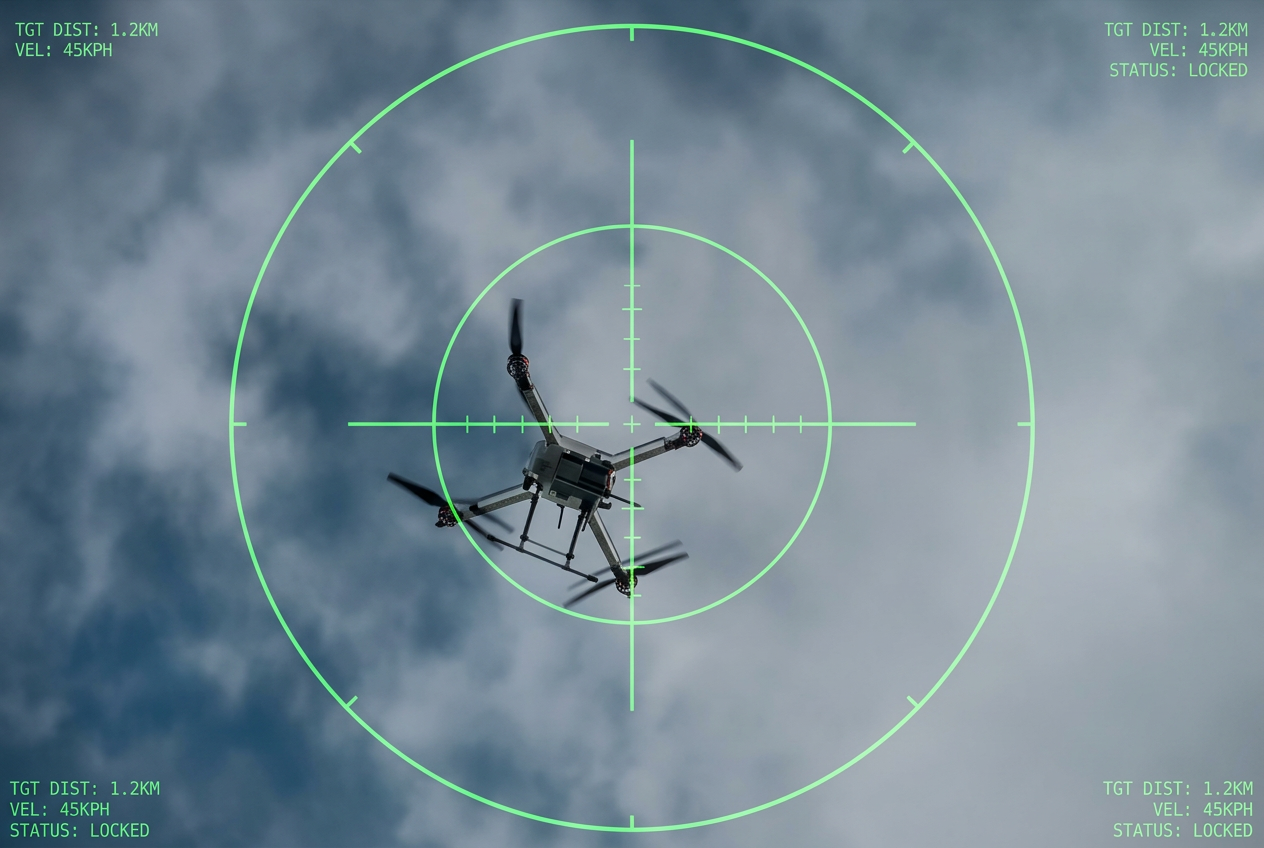
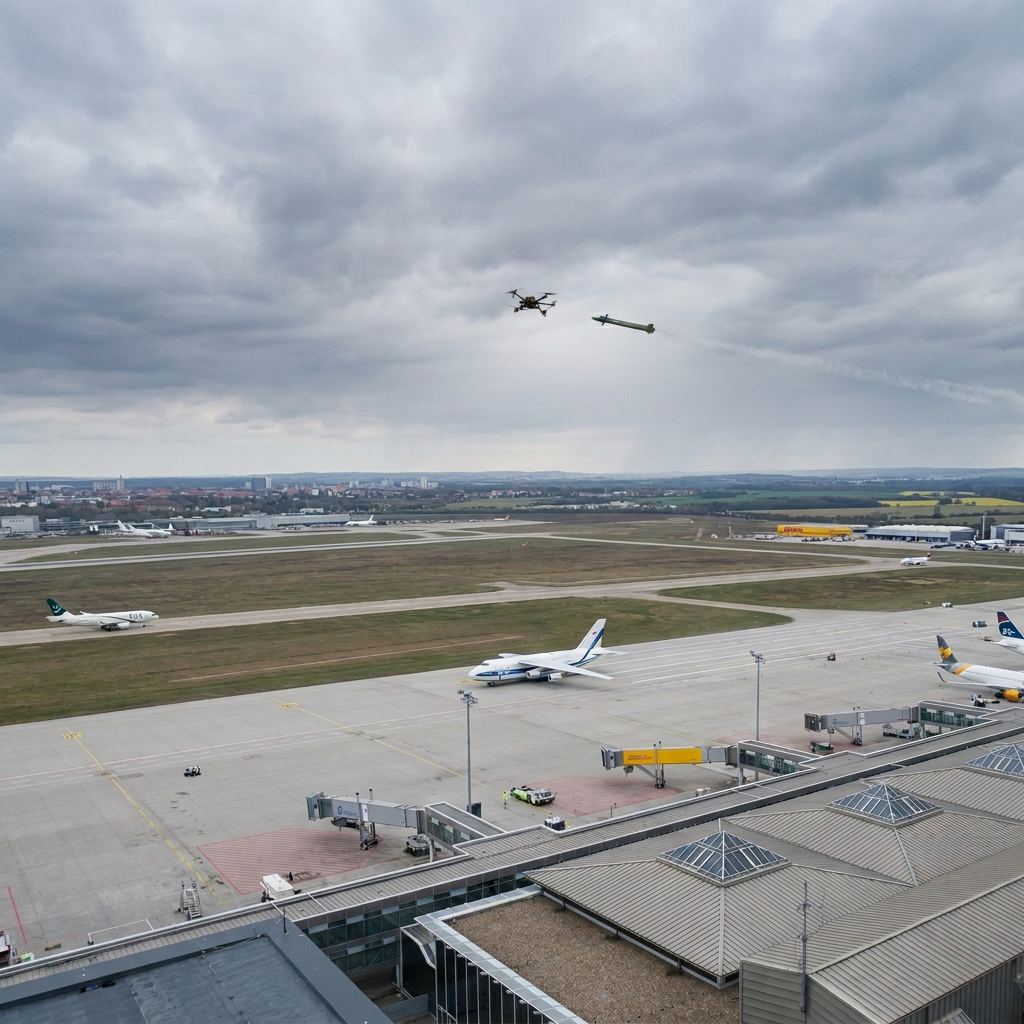
AI-generated example illustrating the defence against a drone attack on Ukrainian Antonov aircraft at Leipzig Airport.
Also protecting civilian critical infrastructure
Unauthorised drone flights have long been a real risk for airports and other sensitive sites. In addition, irisnet also offers detection-only services to civilian customers to protect critical infrastructure – for example in aviation, industry or at public events.
- Airports: early detection of unauthorised drone approaches in the vicinity of runways
- Industry and energy: protection of sensitive facilities against aerial reconnaissance and disruption
- Major events: airspace surveillance at concerts, trade fairs and sporting events
- Public infrastructure: early warning for authorities and security forces in the civilian sector
SEE. DETECT. INTERCEPT. PROTECT.
Powerful sensors
An optical sensor unit with 3840 x 2160 px resolution, 30 fps and 10x optical zoom monitors the airspace.
Automated alignment
Smart control automatically aligns the effector with the detected target within the shortest possible time.
AI detects and tracks
State-of-the-art visual computing automatically detects, classifies and tracks drones (detection and tracking).
Kinetic effect
Neutralisation of low-flying threats by direct hit. No radio takeover and no jamming required.
Cost-effective defence through intelligent division of labour
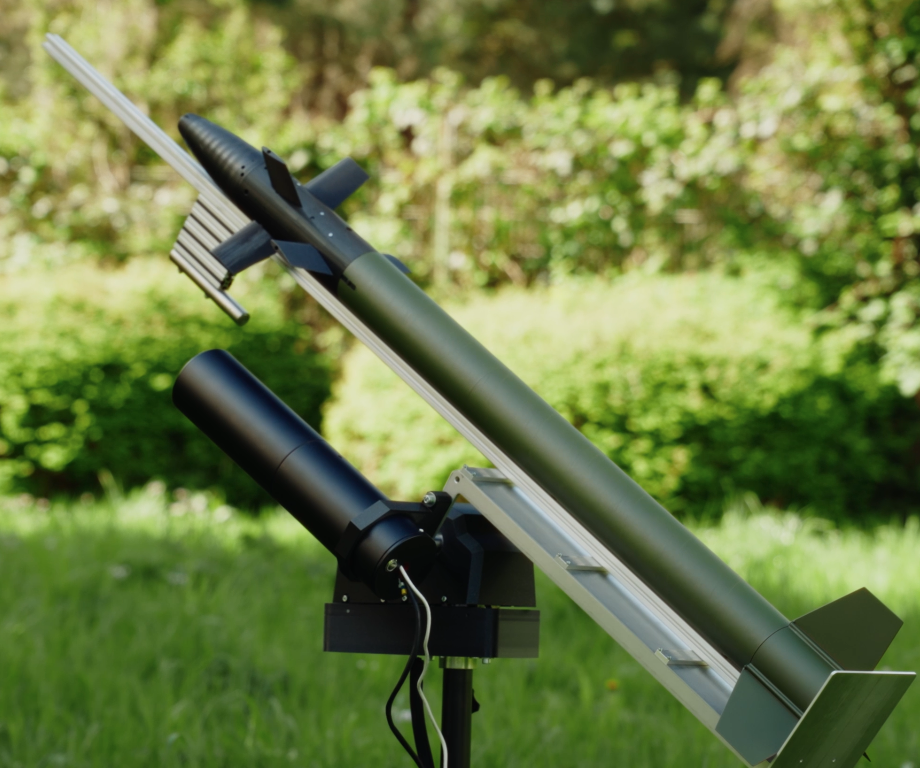
perdix:airis – the AI eye on the ground
The system is built on a fully proprietary AI framework for drone detection, developed in Germany. The perdix:airis ground station detects approaching drones early and hands over the exact target coordinates. The decision to use weapons always remains with a human (human in the loop). The system can be flexibly extended with additional sensors.
PX75 – the precise low-cost effector
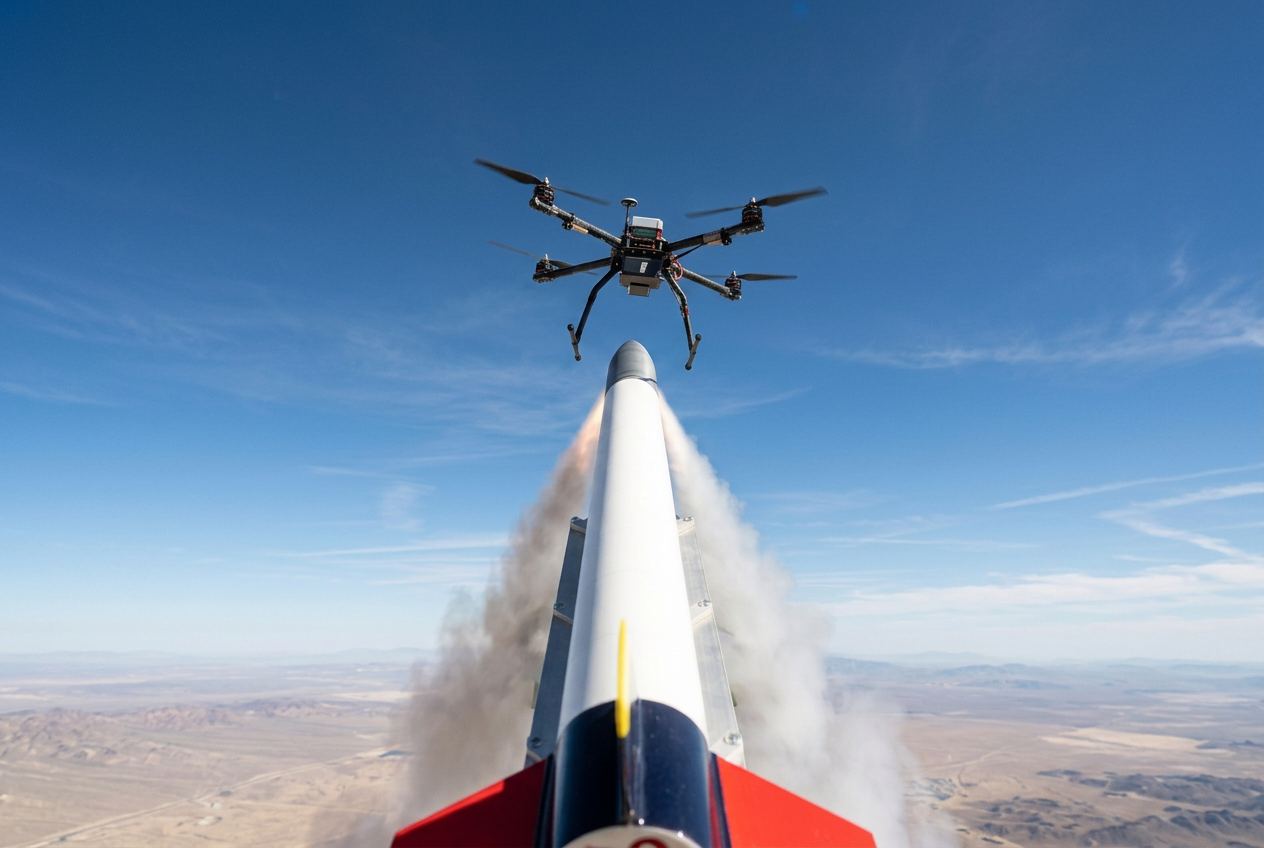
The PX75 guided missile (75 mm diameter) is powered by a pyrotechnic motor. It brings drones down with a kinetic direct hit (hit-to-kill). By dispensing with a conventional warhead and fuze, negative consequences on the ground (collateral damage) are drastically minimised. The system is designed for minimum engagement distances (from 50 m) and a slant range of approx. 250 m.
Strategic partnership for very-short-range drone defence
perdix is being developed in a cooperation between irisnet GmbH, Düsseldorf, and technisch-mathematische studiengesellschaft mbH (tms), Bonn. We combine years of experience in computer vision with decades of expertise in missile technology and ballistics for the German Armed Forces (Bundeswehr).
Thanks to our powerful real-time AI framework, which we have continuously developed over recent years, we were able to achieve highly precise drone detection within a very short time. Together with tms, we are now bringing this expertise to drone defence: we are developing the AI for the PERDIX ground station, which reliably detects drones at close range and thus makes a decisive contribution to defending against them effectively.
Our guided missile is the economical answer to low-cost attack drones. With the PX75, we contribute to a multi-layered defence against airborne threats at the lowest tier by precisely intercepting low-flying drones – with comparatively little negative impact on the ground.


Frequently asked questions
Is perdix already market-ready and operational?
perdix is a technology demonstrator at TRL 4 (“technology validated in the lab”). The basic components are in place and integrated into a system, and their functionality has been demonstrated experimentally – so far under controlled laboratory conditions.
Can perdix engage several drones at once (swarm)?
In principle, yes: the visual computing unit of perdix:airis is able to detect and track multiple targets simultaneously.
Why a guided missile rather than an interceptor drone?
A guided missile considerably simplifies power supply and logistics, is easier to store, requires only minimal electrical energy by comparison and is ready to launch very quickly. Disposal also presents no particular difficulties.
Can perdix be integrated into existing system networks?
perdix is designed as an open system with standard interfaces and can in principle be networked. The demonstrator currently operates stand-alone.
PX75 in test flight
with an example of a drone being shot down.